Antique Women s Suffrage Doll White Black Dress
Dressing for the Movement
Think about the clothes you wear and why you wear them. If you suddenly wore something radically different, what response would you get? For women, clothing choices historically have been particularly constrictive, with subtle and not so subtle changes in style speaking volumes about a woman's character, class, occupation, marital status, and even her position on social and political issues like suffrage.
In the mid-1800s when the suffrage movement began in the United States, women's formal dress styles relied on tight corsets and wide steel hoop cage crinolines that held skirts out in a characteristic bell shape. At home, women wore more practical (and comfortable) tea gowns that didn't require corsets or as large crinolines, but were still considered suitable for receiving family friends and visitors. Even more unstructured was the dressing gown, which women wore only in private and among family, without corset or crinoline.
Early suffragists believed women's public clothing styles were too restrictive and damaging to women's health and best interests. Tightly laced corsets, for example, prevented women from catching their breath if they exerted themselves, resulting in the popular nineteenth century trope of women frequently fainting and being revived by smelling salts. Reformers argued that women's public styles should be more like what they wore in private, to allow them greater freedom of movement. Liberated from their corsets and crinolines, women would be more independent and could enjoy better health and increased vigor. They would finally have the chance to achieve their full potential.
One of the most famous dress reform ideas became known in America as the bloomer, after popularizer Amelia Bloomer. Bloomer was a women's rights advocate, suffragist, and newspaper editor who had attended the 1848 Seneca Falls Convention. Promoted in her newspaper The Lily , the "Bloomer Costume" combined a short skirt over loose fitting trousers gathered at the ankles. In theory this outfit allowed women to retain their modesty while being able to move freely and confidently. Unfortunately, it also drew unwanted attention and mockery on the streets and in society. Bloomer wearers either stopped using the garment entirely, or lengthened their skirts in response.
Bulky skirts in various silhouettes and tight corsets dominated the remainder of the nineteenth century, despite the reformers' best efforts. Dresses in the early 1910s, however, were looser and more fluid than earlier fashions, and increasingly worn without corsets. Marching in suffrage parades and picketing government offices, suffragists in this period often wore white. The idea was to show solidarity by dressing in a uniform color. The white dress – something almost every woman had – proved the ideal choice. White also symbolized the purity and moral superiority that women argued they would bring to government and politics, if granted the right to vote.
World War I accelerated the trend from tight and voluminous to comfortably loose and liberating. Fabric like so much else was scarce during the war and making do with less was a patriotic act. Moreover, women employed in wartime industries couldn't risk excess fabric catching in machinery or interfering with their work. In the late 1910s and early 1920s, therefore, women adopted the flapper dress: calf-length, lower necked, with a straight and slim silhouette, and a loose, dropped waist. Evening dresses in the style featured silk and intricate beadwork. Daywear worn by all women – flappers or no – included cotton house dresses, often in a gingham or sack cloth print. Knit cardigans and cloche hats, like the ones modeled by Wilton botanist and Garden Club member Anna Carpenter, were also popular.
Despite winning the vote and all the associated advancements in dress reform since the mid-1800s, women's work was nowhere near finished in 1920. As a Ridgefield Press article had pointed out a few years earlier, women's high-heeled shoes still hobbled their progress.

1860's Two Piece Evening Dress
Dresses from the early and mid 19th century were defined by corsets and large crinolines, which created a distinctive bell shape. From the Wilton Historical Society permanent collection.

1880's Tea Gown
At home, women of the late 19th century wore more practical dresses that were still considered suitable for receiving family friends and visitors. From the Wilton Historical Society permanent collection.

The Bloomer Outfit
The Bloomer outfit, popularized by women's rights activist Amelia Bloomer, consisted of a skirt worn over the top of loose fitting trousers. In theory this outfit allowed women to retain their modesty while being able to move freely and confidently.

1890's Ambler Dress
This dress, demonstrating a typical 1890's silhouette, was owned by a member of the Ambler family, most likely Hannah. From the Wilton Historical Society permanent collection.

1880's Dress
Dresses from the 1880's are exemplified by the slim waisted corset and a skirt with large bustle in the rear. From the Wilton Historical Society permanent collection.
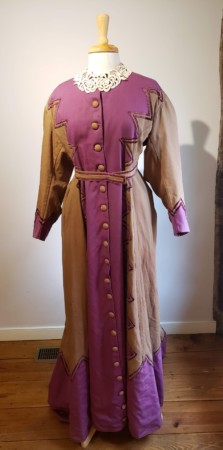
c. 1880's Dress
From the Wilton Historical Society permanent collection.

Suffrage Marchers
The white dress, an article of clothing that almost every women of the period had, became a symbol of solidarity and purity among suffrage activists.

1905 White Dress
A 1905 dress owned by a member of the Comstock family of Wilton that is typical of the dresses worn by suffrage activists. From the Wilton Historical Society permanent collection.

c. 1912 Dress
A white dress with accompanying white tunic. From the Wilton Historical Society permanent collection.
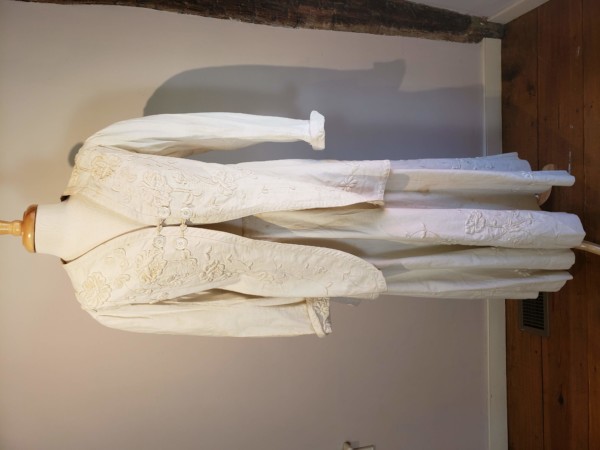
97.31.3
A c. 1910 dress consisting of a skirt and coat.
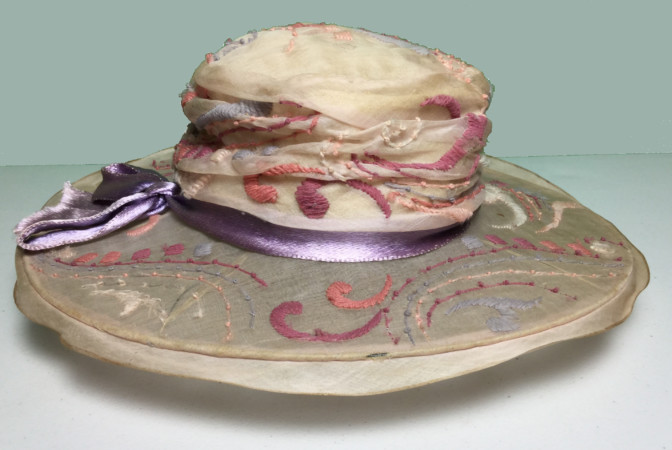
c. 1915 Hat
On loan from the Fairfield Museum and History Center.
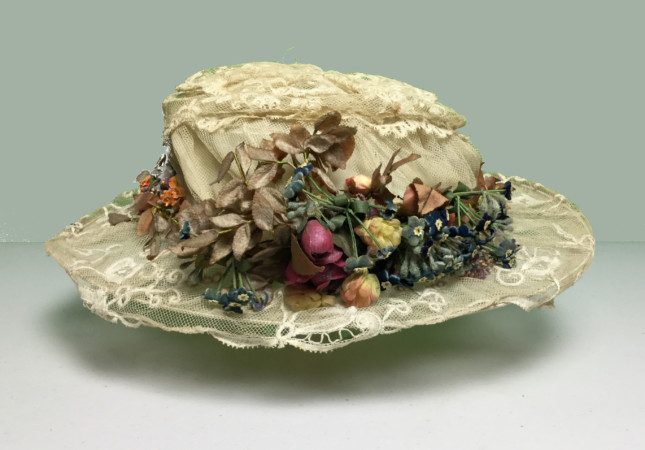
c. 1915 Hat
On loan from the Fairfield Museum and History Center.

1920's Flapper Dress
In the late 1910's and 1920's, women adopted the flapper dress: calf-length, lower necked, with a straight and slim silhouette, and a loose, dropped waist. From the Wilton Historical Society permanent collection.

Anna Carpenter Illustration
This illustration of Wilton resident Anna Carpenter demonstrates a more typical daytime outfit for a women of the 1920's, including the flapper silhouette and cloche hat. From the Wilton Historical Society permanent collection.

"Ridgefield Press" High Heeled Shoe Article
A "Ridgefield Press" column from 1915 stating that women would never be truly liberated unless they move past the high heeled shoe.
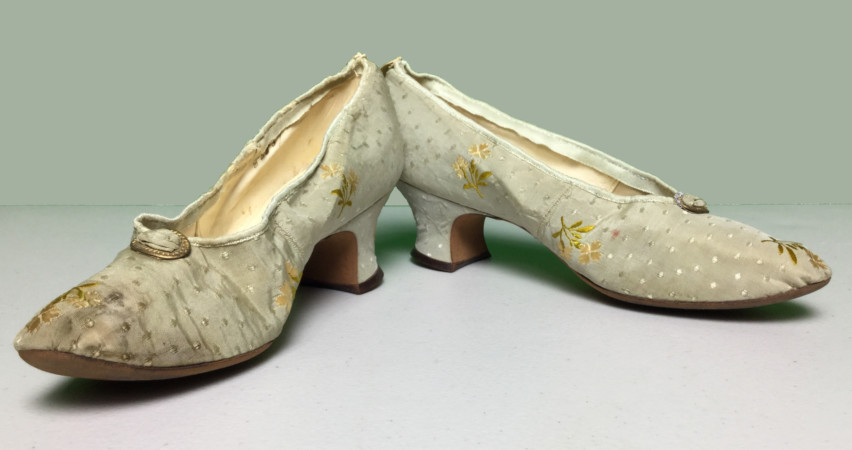
c. 1910 High-heeled Shoes
A pair of the high-heeled shoes like one "Ridgefield Press" columnist believed would prevent women from ever become completely liberated. From the Wilton Historical Society permanent collection.
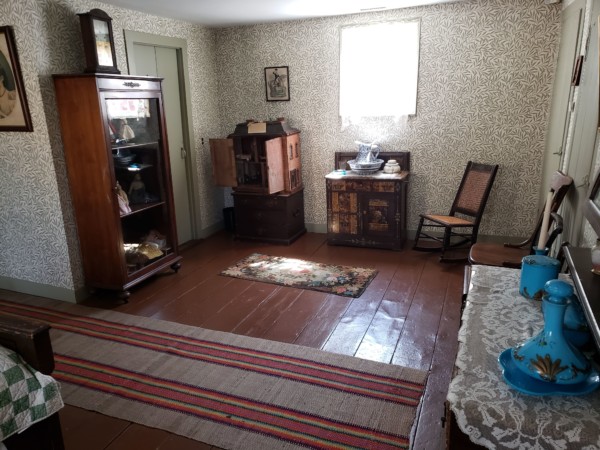
1890s Bedroom Room
This room at the Wilton Historical Society is a reproduction of 1890's bedroom, complete with replica William Morris wallpaper. As it is today, activists would have dressed in their bedrooms before participating in protests and parades.
Continue to "Parades, Poems, & Politics" >
Source: https://wiltonhistorical.org/dressing-for-the-movement/
0 Response to "Antique Women s Suffrage Doll White Black Dress"
Post a Comment